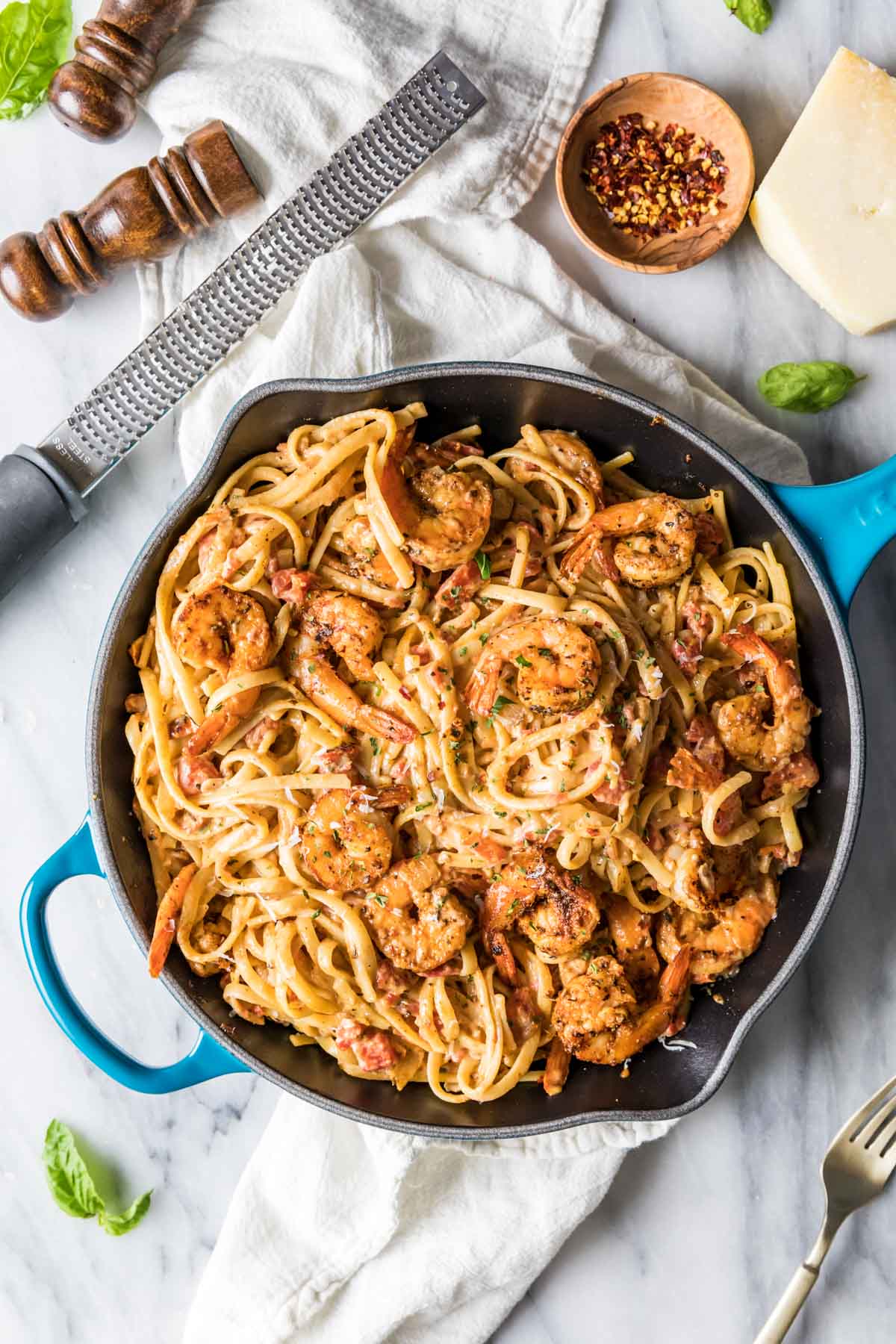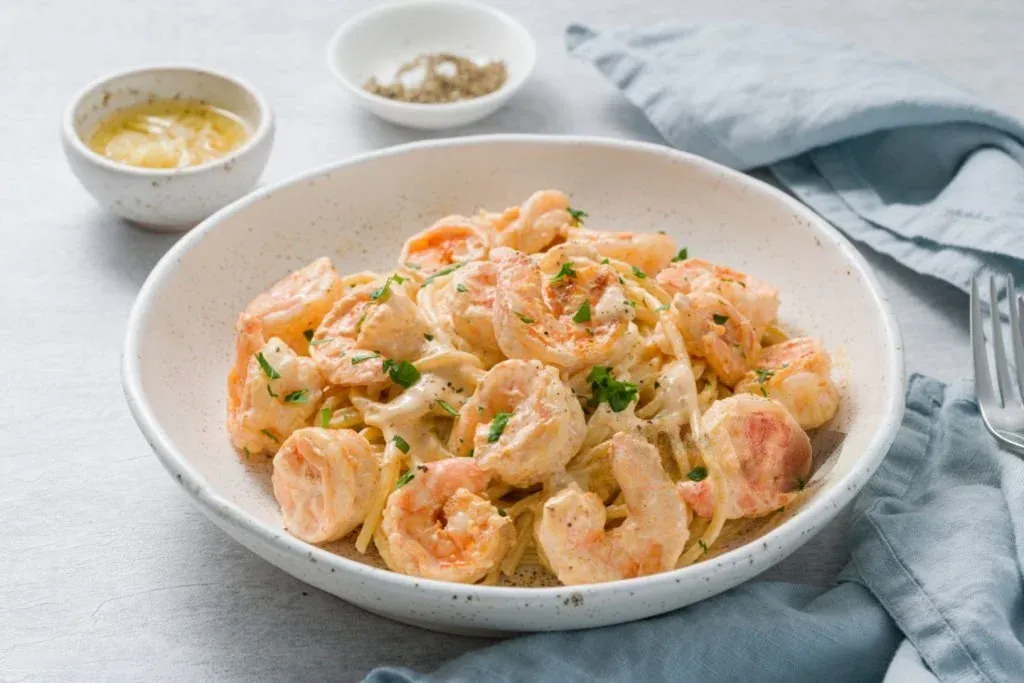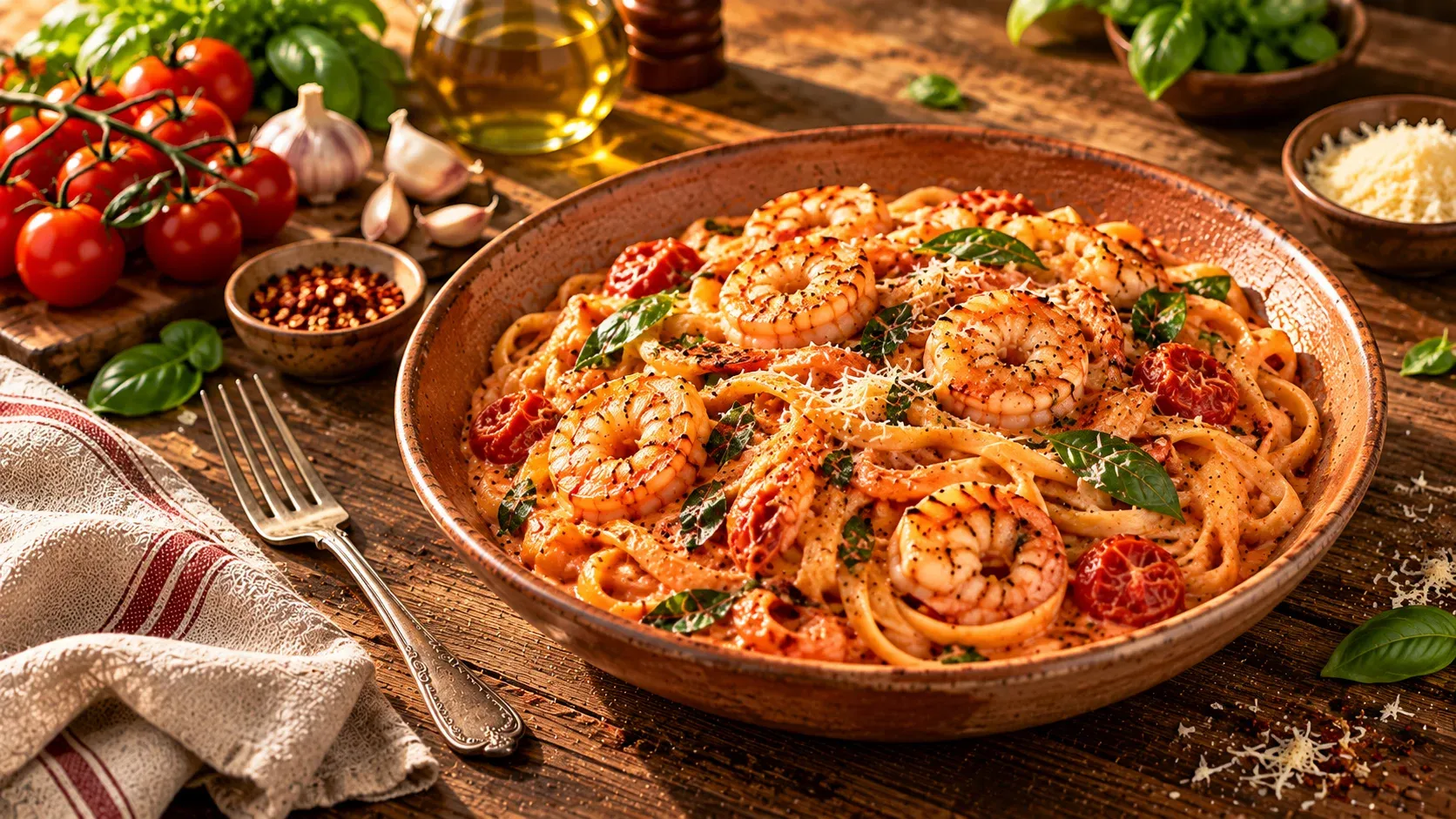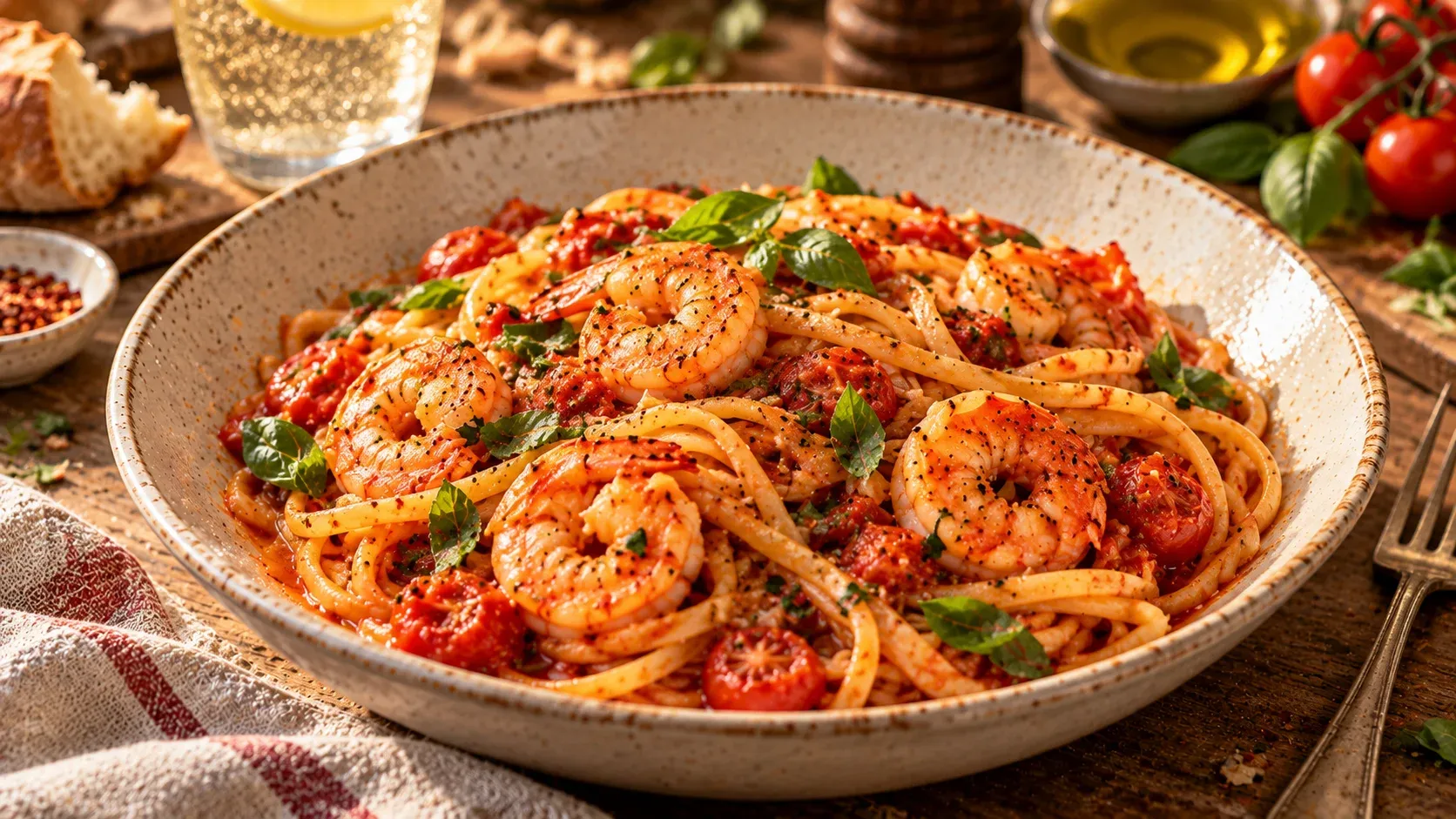
Tomato prawn pasta made with a secret umami trick, no cream needed. Covers common mistakes, healthy swaps, and what to serve it with.
Tomato Prawn Pasta
Tomato prawn pasta is proof that a few simple ingredients, cooked the right way, can taste better than something far more complicated. Juicy prawns, a bright tomato sauce, garlic, a little heat, and a handful of fresh basil. No cream needed, no long ingredient list, just real flavor built in under twenty minutes.
This dish sits at an interesting spot in Italian-style cooking. It's light enough to eat in the middle of summer, yet satisfying enough to serve on a cold night when you want something warm and filling. That kind of flexibility is part of why it shows up on so many food blogs and family dinner tables, and once you understand the handful of techniques behind it, you'll see why it works so consistently well.
Do Prawns and Tomatoes Go Together?
Yes, and it's one of the more natural pairings in Italian cooking. Tomatoes bring acidity and a bit of natural sweetness, which balances the richness of the prawns instead of fighting against it. The slight brininess of the prawns also works well against the tomato's sharper edge, creating a kind of back-and-forth between the two flavors rather than one overpowering the other.
This is the same reason tomato and seafood show up together across so many coastal cuisines, from Italian seafood stews to Spanish fish dishes built on a tomato base. The pairing isn't a trend or a modern invention. It's a combination that's held up for generations because the flavors genuinely complement each other.
Ingredients You'll Need
- Pasta (tagliatelle, spaghetti, or linguine all work)
- Raw prawns, peeled
- Garlic, finely chopped
- Chilli flakes
- Olive oil and butter
- Tomatoes (fresh cherry or baby plum, or passata)
- Fresh basil
- Salt and pepper
- Optional: a splash of white wine, a squeeze of lemon, a couple of anchovy fillets
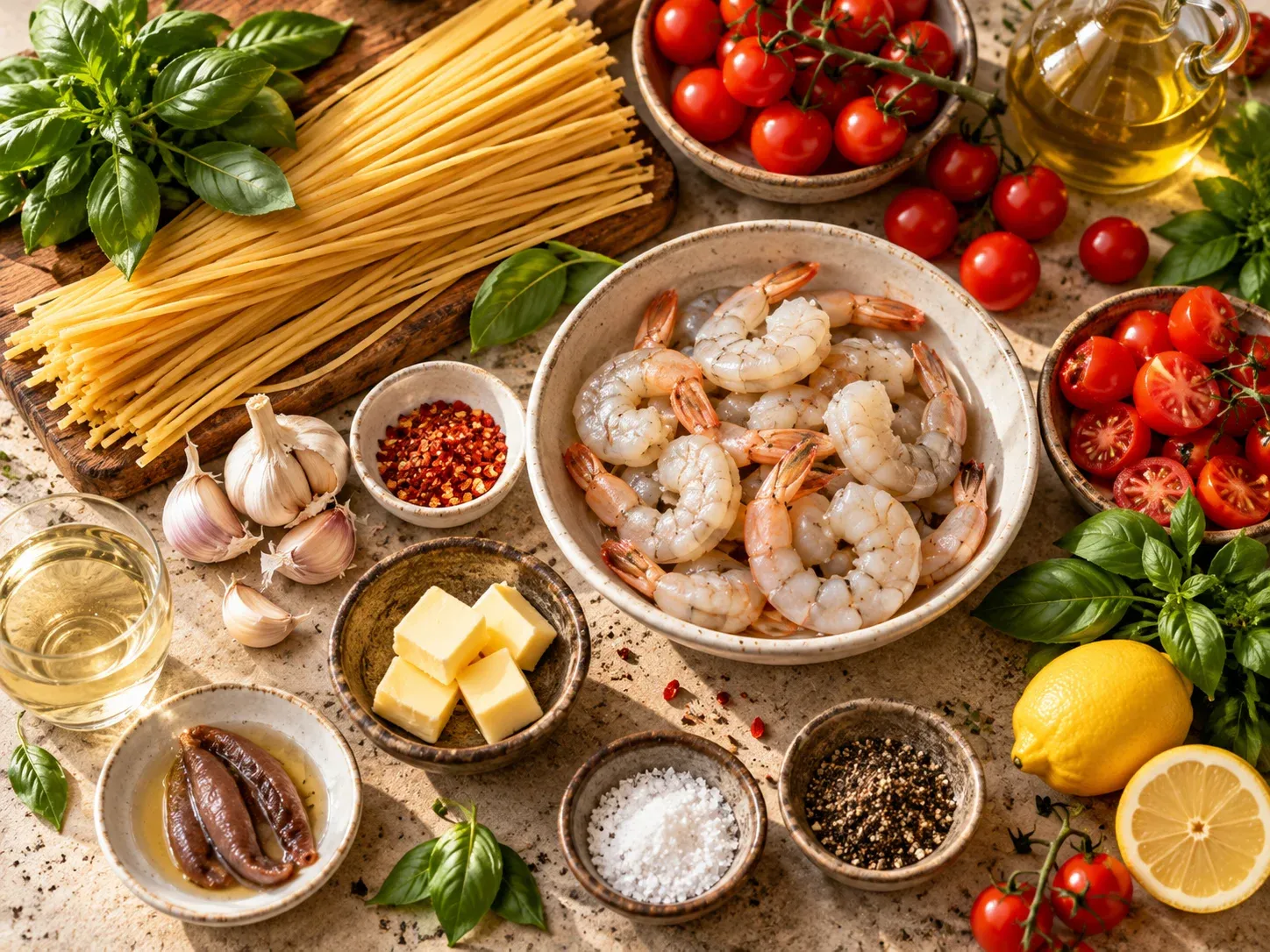
For two people, a good starting point is around 200 grams of pasta, 250 grams of prawns, three cloves of garlic, and 250 grams of tomatoes if using fresh, or around 250 to 300 millilitres if using passata. These numbers aren't fixed. Tomato-based sauces are forgiving, and you can scale the tomato amount up or down depending on how saucy you want the final dish to be.
Choosing Your Tomatoes
Fresh cherry or baby plum tomatoes give the sauce a lighter, slightly sweeter result, since they burst and release their juices as they cook rather than forming a thick sauce from the start. This is the version most food blogs lean toward in spring and summer, when tomatoes are naturally at their best and carry more flavor on their own.
Passata, which is just smooth, strained tomatoes with no seeds or skin, gives you a more consistent, saucier result with less effort, since there's no chopping or bursting involved. It's a good choice year-round, especially outside of tomato season when fresh ones can taste bland or watery.
Canned crushed tomatoes sit somewhere in between and work fine as a backup if that's what you have in the cupboard. None of these options are wrong. Fresh tomatoes give you a lighter, brighter dish with visible pieces of tomato throughout, while passata gives you something closer to a classic, smoother marinara-style sauce. Choose based on what you have and what texture you're after, not because one is objectively better than the other.
Should You Use Wine?
A splash of white wine, simmered down before the tomatoes go in, adds a bit of depth and helps lift any browned bits left in the pan from searing the prawns. This process, called deglazing, pulls flavor off the bottom of the pan that would otherwise just get thrown away when you add the next ingredient.
It's optional, though. If you'd rather skip it, a squeeze of lemon juice does a similar job of adding brightness without needing an actual bottle of wine open on a weeknight. We cover this same decision in more detail in our guide to creamy prawn linguine, since the logic is the same here. Use it if you have it, skip it if you don't, and the dish still works either way. The wine's job is to add a subtle layer of flavor in the background, not to be something you can taste directly in the finished dish.
How to Make Tomato Prawn Pasta
Step-by-Step Instructions
- Bring a large pot of salted water to a boil and start cooking your pasta. Reserve a cup of the pasta water before draining.
- Pat the prawns completely dry and season them with salt and pepper.
- Heat olive oil in a large pan over medium-high heat. Sear the prawns for about a minute per side, until just opaque, then remove them from the pan entirely.
- Lower the heat slightly and melt butter in the same pan. Add the garlic and chilli flakes, cooking for twenty to thirty seconds until fragrant.
- If using wine, pour it in now and let it simmer for a minute or two. If using anchovies, add them at this stage too, letting them melt into the butter.
- Add the tomatoes, season generously, and cook for a few minutes until they begin to soften and release their juices.
- Transfer the drained pasta directly into the sauce, along with a splash of reserved pasta water.
- Toss everything together, then add the prawns back in along with torn basil leaves.
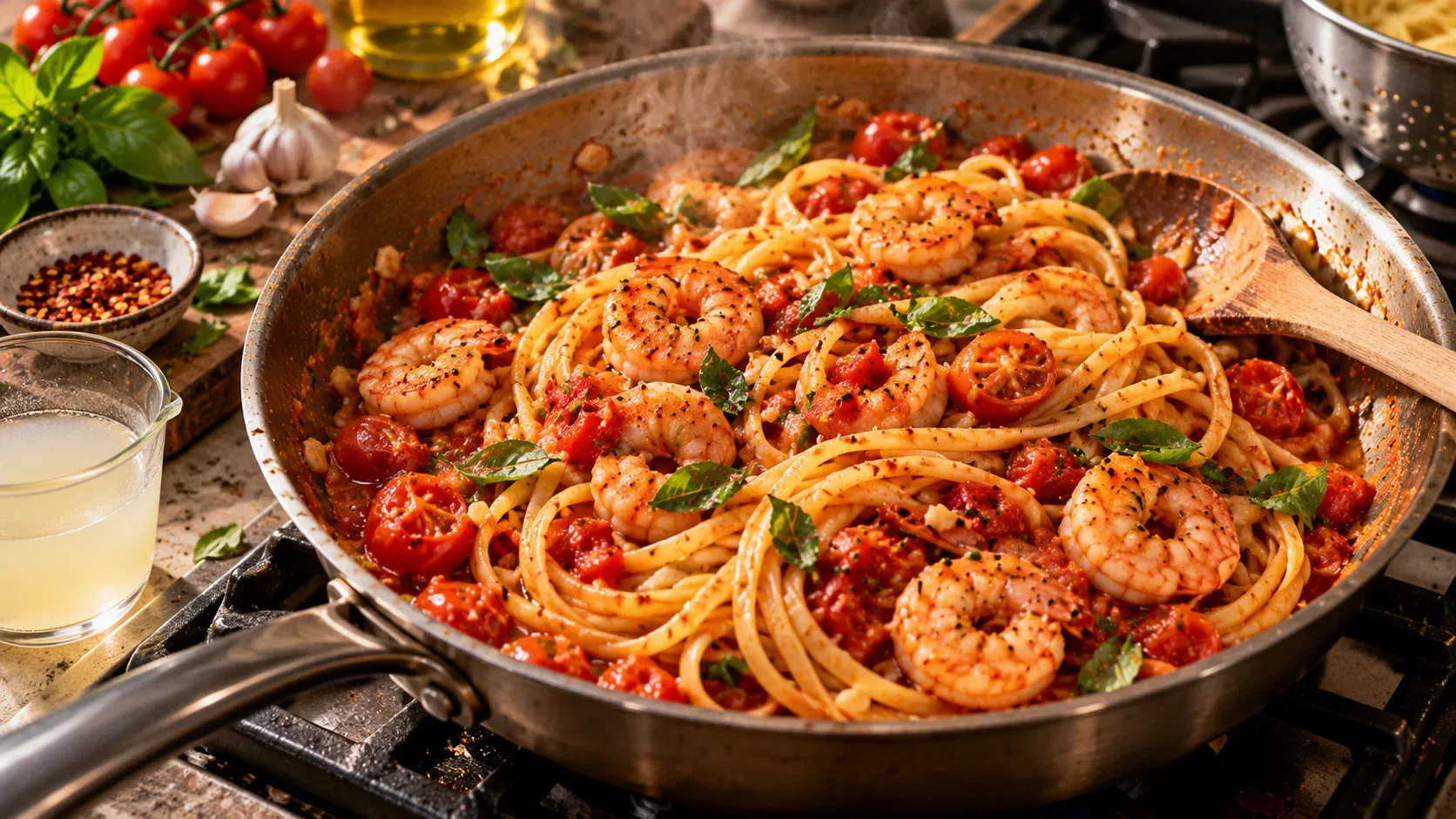
- Keep tossing for another minute until the sauce turns glossy and clings to the pasta rather than pooling at the bottom of the pan.
The Secret Ingredient Trick
Here's something almost nobody explains clearly, even though a few well-known recipes quietly use it. A couple of anchovy fillets, melted into the pan early on, add a deep savory quality to the sauce without tasting fishy at all. The anchovies essentially dissolve as they cook, and what's left behind isn't a fish flavor, it's a background richness that makes the whole sauce taste more complex, like it's been simmering for hours instead of twenty minutes.
If you're skeptical, start with just one fillet. You genuinely won't taste anchovy in the finished dish. You'll just notice the sauce tastes more finished and rounded, the same way a pinch of salt makes a dessert taste sweeter rather than salty. This trick is especially useful if you're making the dish without wine, since the anchovies add a similar depth that the wine would otherwise provide.
Getting a Glossy, Not Watery, Sauce
Right after you add the tomatoes and pasta together, the sauce will look thin and a little separated. This is normal, not a mistake, and it's the same stage that trips up a lot of home cooks into thinking something has gone wrong. As you toss the pasta, the starchy pasta water you saved earlier mixes with the tomato juice and any butter in the pan, and it binds everything into a glossy sauce that actually sticks to the noodles rather than running off them.
If it still looks too thin after a minute of tossing, add another small splash of pasta water and keep going. If it looks too thick or dry instead, the same fix applies in reverse, since pasta water can loosen a sauce just as easily as it can thicken one. This single step is the difference between a pasta dish that tastes like a restaurant made it and one that tastes like boiled noodles with tomato chunks sitting on top.
Common Mistakes When Making Prawn Pasta
- Overcooking the prawns. This is the single most common issue. Prawns cook in a minute or two, and once they curl into a tight O shape, they've gone too far. Pull them at a loose C shape instead, since they'll continue cooking slightly from residual heat even after you take them off the stove.
- Adding prawns too early. If they go into the sauce before it's ready, they'll overcook while everything else finishes simmering. Always sear them separately and add them back in near the very end.
- Skipping the pasta water. Without it, the sauce never properly binds to the pasta, and you end up with watery sauce pooling at the bottom of the bowl instead of coating each strand evenly.
- Overcrowding the pan when searing. Too many prawns at once drops the pan's heat, and they end up steaming instead of searing, which means no color and noticeably less flavor.
- Letting the garlic burn. Garlic goes from fragrant to bitter in a matter of seconds. Keep the heat moderate and stir constantly during this step, since burnt garlic can throw off the flavor of the entire sauce.
- Using cold prawns straight from the fridge. Letting them sit at room temperature for a few minutes before cooking helps them cook more evenly, rather than being cold in the center while the outside is already done.
What Pairs Well With Tomato Prawn Pasta
This dish is light enough to stand on its own, but a few simple additions round it out nicely. A crusty piece of garlic bread is almost expected, especially since there's usually extra sauce left in the bowl worth mopping up once the pasta is gone. A simple green salad with a sharp vinaigrette adds some freshness and acidity without competing with the tomato base already in the dish.
For something to drink, a dry white wine like Sauvignon Blanc works well here, since its acidity matches the tomato base rather than clashing with it the way a heavier red might. If you'd rather skip wine with the meal entirely, sparkling water with a wedge of lemon keeps things light and refreshing in a similar way.
If you're serving this for a slightly more special occasion, starting with a light appetizer like bruschetta keeps the tomato theme consistent across the meal without feeling repetitive, since the flavors are similar but the textures are different enough to feel intentional rather than accidental.
Make It Your Own
Once you've made the base version, there's plenty of room to adjust it to what you have on hand or what you're in the mood for.
Adding Vegetables
Spinach stirred in at the very end wilts quickly in the residual heat and adds some color and nutrition without much extra effort. Thin slices of courgette cooked alongside the garlic add a mild, slightly sweet note that pairs naturally with the tomato. A handful of peas tossed in during the last minute works well too, especially if you want some texture contrast against the softer tomatoes and pasta. Broccolini, lightly steamed and added at the end, is another option if you want something a bit heartier on the plate.
Make It Spicy or Make It Creamy
If you want more heat, increase the chilli flakes, or add a small, finely chopped fresh chilli alongside the garlic for a sharper, more immediate kick rather than the gentler warmth dried flakes provide. If you'd rather go in the richer direction instead, a small splash of cream stirred in at the end turns this into a completely different, creamier dish while keeping the same tomato base underneath. Both directions work well. It really depends on what you're in the mood for on a given night, and neither version requires changing the core method.
Swapping the Protein or Adding Extras
If you want to stretch the dish further, a small amount of diced chorizo fried off before the garlic adds a smoky, slightly spicy note that works surprisingly well against the sweetness of the tomatoes. This isn't traditional, but it's a common and well-liked variation. Fresh herbs can also be swapped depending on what you have. Parsley works as a milder substitute for basil, while a small amount of fresh dill adds an unexpected but pleasant brightness if you want to try something different from the usual.
Is Tomato Prawn Pasta Healthy?
Compared to a cream-based prawn pasta, this version is naturally lighter. Prawns themselves are lean and high in protein, and a tomato-based sauce doesn't carry the same calorie and fat load that butter and cream do. A typical serving sits in a moderate range for a pasta dish, especially if you go easy on the olive oil and skip any added cream entirely.
If you're watching calories more closely, leaning on fresh tomatoes rather than oil-heavy jarred sauces, measuring your pasta portion rather than estimating it by eye, and adding extra vegetables like spinach or courgette to bulk up the dish are all easy ways to keep this on the lighter side without losing flavor. Reducing the olive oil slightly and relying more on garlic, chilli, and basil for flavor also helps, since those ingredients add very little in the way of calories but contribute a lot of taste.
Prawns are also naturally low in carbohydrates and fat on their own, which means most of this dish's calories come from the pasta itself. If you want a lower-carb version, reducing the pasta portion and increasing the vegetable content is a straightforward way to shift the balance without losing the dish's character.
Storing and Reheating Leftovers
This dish is genuinely best eaten fresh, and that's true of most prawn pasta recipes rather than something specific to this one. Prawns lose their texture when reheated, often turning rubbery or chewy in a way that's hard to disguise. If you do have leftovers, store them in an airtight container in the fridge for up to a day, and reheat gently on the stove over low heat with a small splash of water to loosen the sauce back up. Avoid the microwave if you can, since it tends to overcook the prawns unevenly, leaving some parts rubbery while others are barely warmed through. Freezing isn't recommended either, since the tomato sauce can separate once thawed, and the prawns tend to lose even more of their texture after a second temperature change.
Recipe FAQs
Can I use frozen prawns?
Yes. Just make sure they're fully thawed and patted dry before cooking, so they sear properly instead of releasing water into the pan and steaming instead.
What kind of pasta should I use?
Long pasta shapes like tagliatelle, spaghetti, or linguine all work well, since the sauce coats them more evenly than it would a short pasta shape like penne.
Can this be reheated?
It's best eaten fresh, since prawns don't hold up well to reheating and can turn rubbery. If you do have leftovers, reheat gently on the stove with a small splash of water to loosen the sauce.
How many prawns should I use per person?
A good rule of thumb is around six to eight medium prawns per person as a main course, though this can flex depending on what else is in the dish and how generous you want each portion to be.
Can I use a different kind of seafood?
Yes. This sauce works well with other quick-cooking seafood like scallops or even chunks of white fish, as long as you adjust the cooking time slightly to match whatever you're using instead of prawns.
What is Jamie Oliver's tomato prawn pasta recipe?
Jamie Oliver has a well-known version made with spaghetti, prawns, chilli, and rocket rather than basil, giving it a slightly peppery finish instead of the sweeter, herbier flavor basil brings to this version. Both approaches are valid takes on the same basic idea. This version leans on basil and a touch of umami from anchovies instead, giving it a different but equally good result.
Final Thoughts
Tomato prawn pasta proves that you don't need cream, a long ingredient list, or hours of simmering to make something that tastes genuinely good. Nail the basics, dry prawns, a glossy sauce built from pasta water, and prawns added back in at the right moment, and the dish comes together almost every time. Once you've made it once, adjusting it for more heat, more vegetables, or a creamier finish becomes second nature, and it quickly turns into one of those recipes you can make from memory without needing to check the method again.
Recipe
Tomato Prawn Pasta
By Rabi
Tomato prawn pasta with a secret umami trick, no cream needed, ready in under 20 minutes.
- Prep
- 10 min
- Cook
- 15 min
- Rest / additional
- 0 min
- Total
- 25 min
- Servings
- 2
- Cuisine
- Italian
Ingredients
Instructions
- Bring a large pot of salted water to a boil and cook the pasta. Reserve a cup of pasta water before draining. Pat the prawns completely dry and season with salt and pepper. Heat olive oil in a large pan over medium-high heat. Sear the prawns for about a minute per side, then remove from the pan. Lower the heat and melt the butter in the same pan. Add the garlic and chilli flakes, cooking for 20-30 seconds until fragrant. If using, add the anchovy fillets now and let them melt into the butter. Add the tomatoes, season well, and cook for a few minutes until they soften and release their juices. Transfer the drained pasta into the sauce with a splash of reserved pasta water. Toss in the prawns and torn basil leaves. Keep tossing until the sauce turns glossy and clings to the pasta.
Notes
A splash of white wine can be added with the tomatoes for extra depth. Best eaten fresh, as seafood doesn't reheat well.
Nutrition per serving
- calories
- 480 kcal
- protein
- 30 g
- carbohydrates
- 62 g
- fat
- 12 g
Related Articles
More posts you might enjoy