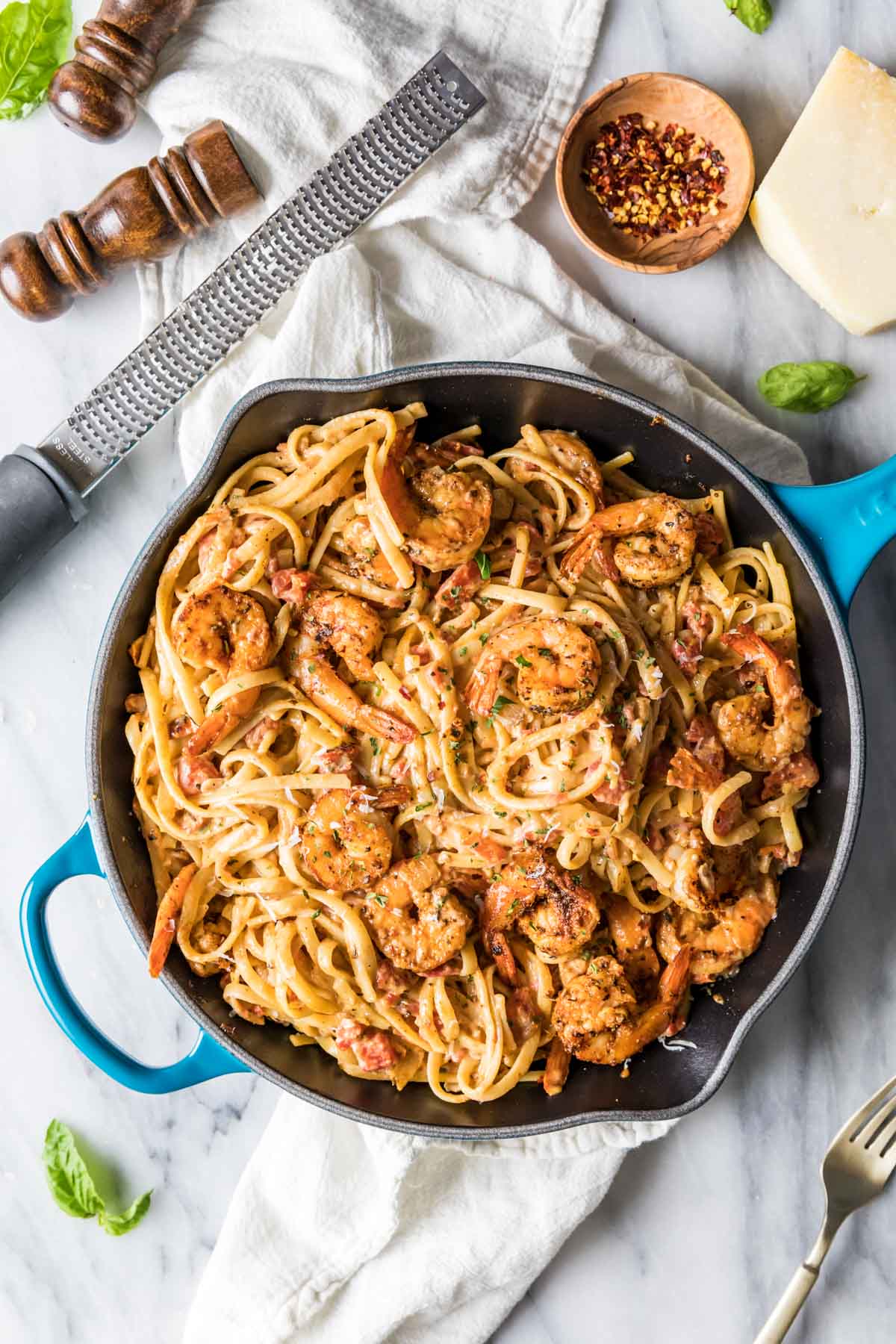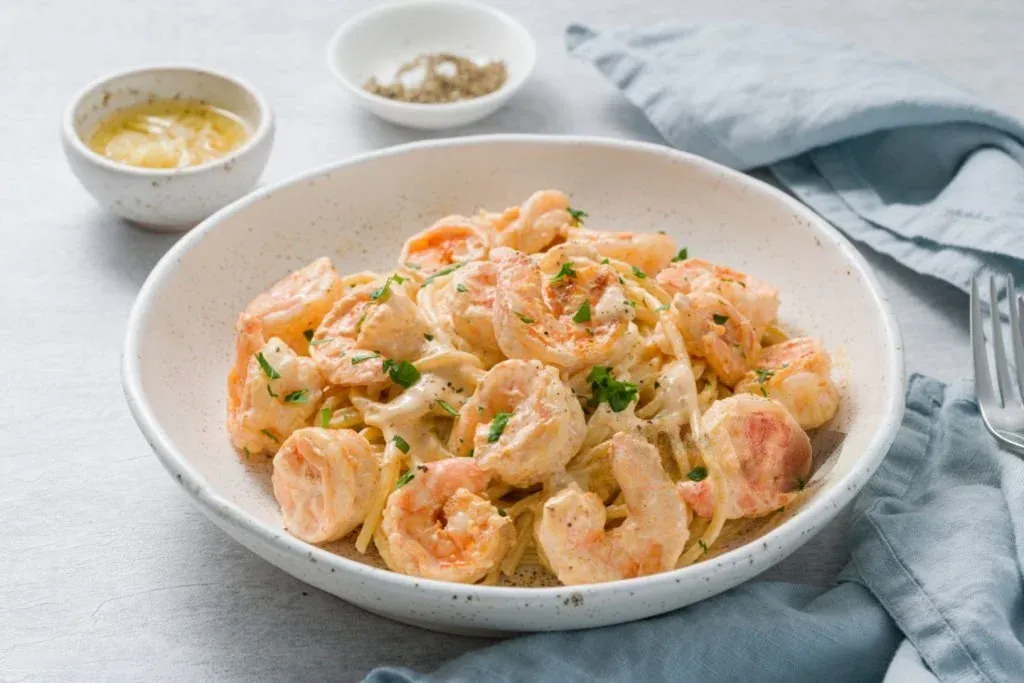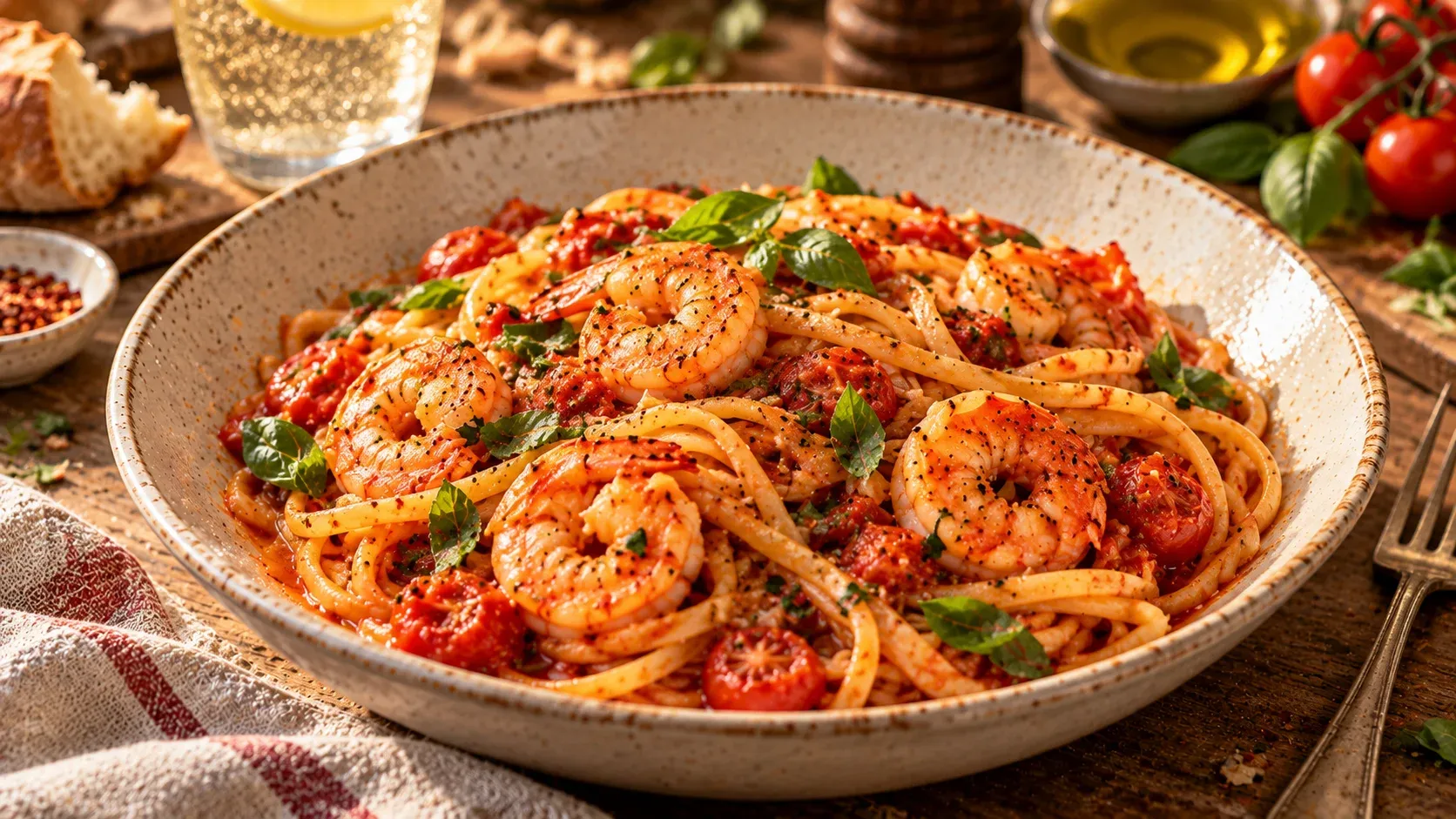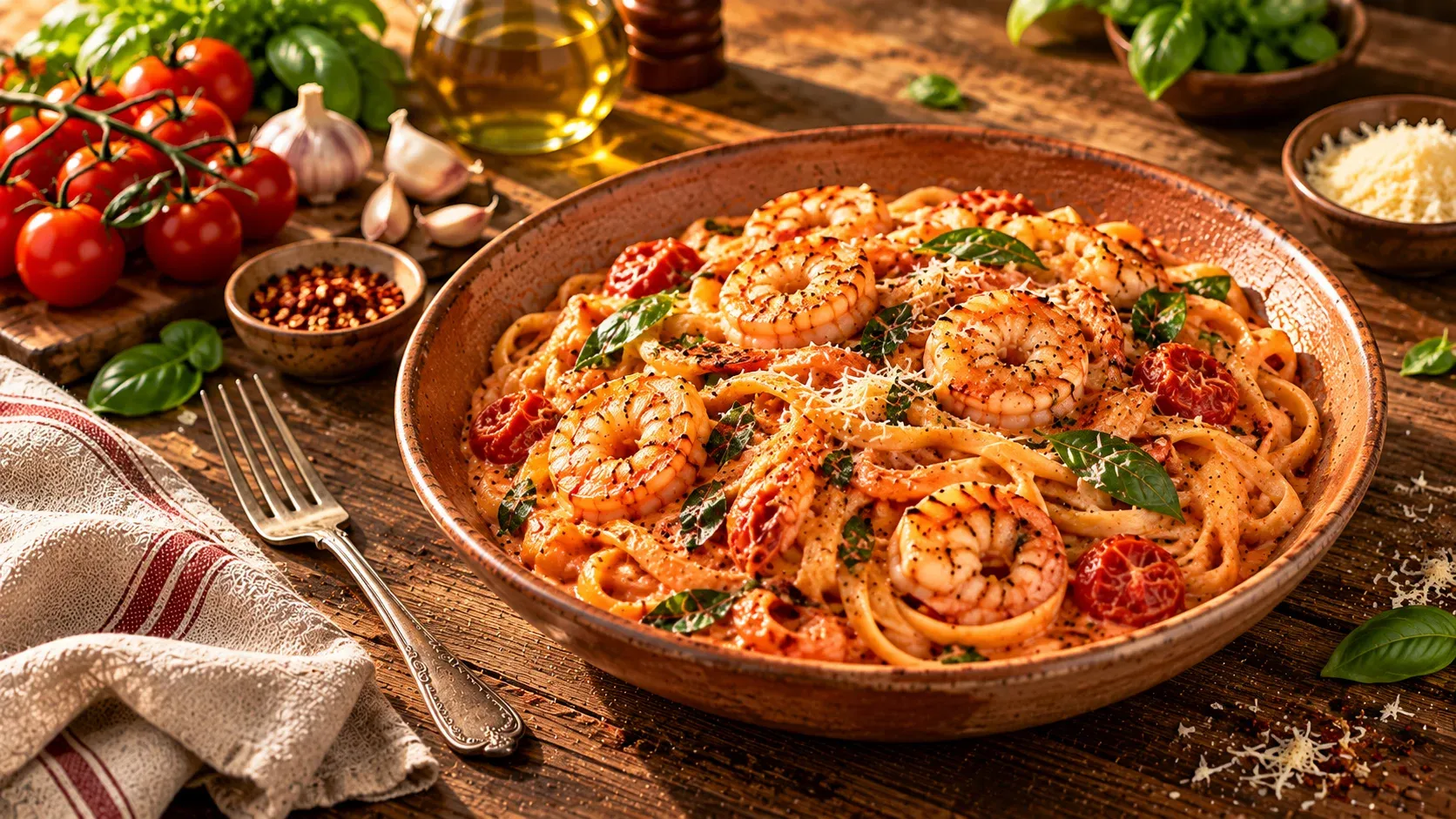
Creamy tomato prawn pasta with the perfect cream-to-tomato ratio explained. Covers serving ideas, healthy swaps, and how it compares to our other recipes.
Creamy Tomato Prawn Pasta
Some nights you want a creamy pasta. Other nights you want something lighter and tomato-based. Creamy tomato prawn pasta exists for the nights you can't decide. It takes the richness of a cream sauce and the brightness of tomato and puts them in the same pan, giving you a dish that's rounder in flavor than either one alone.
This isn't just two recipes mashed together without thought. Getting the balance right between the tomato and the cream matters, and most recipes either lean too far into one direction or don't explain why the ratio matters in the first place. That's what this guide actually walks through, alongside the full recipe.
Creamy or Tomato? Why Not Both
If you've made our tomato prawn pasta or our creamy garlic prawn pasta already, you know they're built around two very different ideas. One leans on acidity and brightness. The other leans on richness and depth. Creamy tomato prawn pasta sits right in the middle, and it works because tomato and cream genuinely complement each other rather than competing. The acidity in the tomatoes keeps the cream from tasting flat and one-note, while the cream smooths out the tomato's sharper edges. The result tastes rounder than either version on its own, without feeling like a compromise.
Ingredients You'll Need
- Pasta (penne, fettuccine, or rigatoni all work well here)
- Raw prawns, peeled
- Garlic
- Chilli flakes (optional, for a little background heat)
- Olive oil and butter
- Tomatoes (passata or canned crushed tomatoes work best for this version)
- Cream
- Parmesan
- Fresh basil
- Salt and pepper
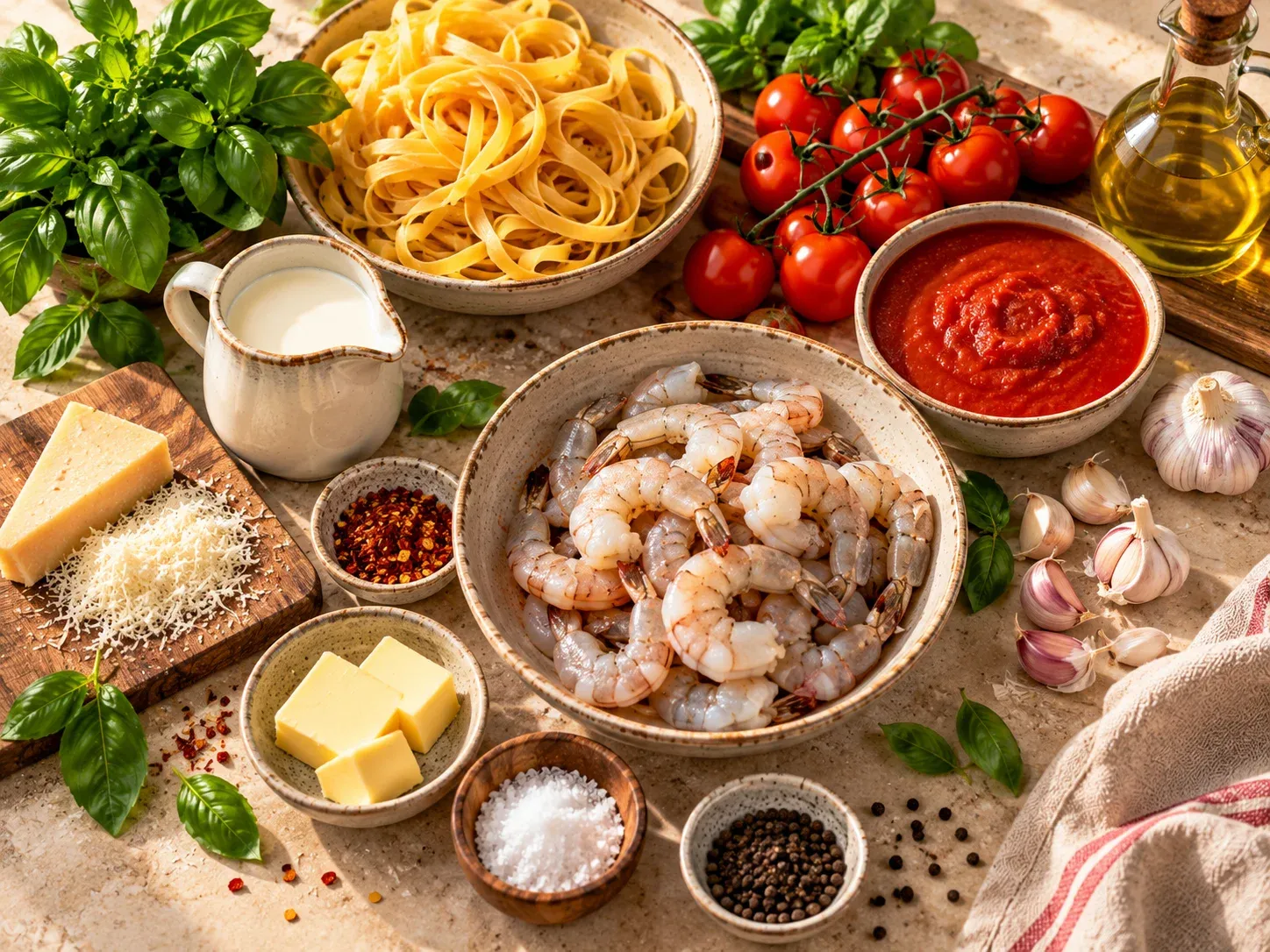
For two people, a solid starting point is 200 grams of pasta, 250 grams of prawns, three cloves of garlic, around 200 millilitres of passata, and 100 millilitres of cream. These numbers aren't rigid. You can shift the tomato-to-cream ratio depending on which flavor you want leading.
Balancing Cream and Tomato
This is the one decision that actually defines the dish, and it's the part most recipes skip over without explanation. A rough two-to-one ratio of tomato to cream gives you a sauce where tomato is clearly the dominant flavor, with cream rounding out the edges in the background. Flip that ratio closer to even, and the dish starts tasting more like a classic creamy pasta with a subtle tomato note running through it. Neither is wrong. It depends on what you're craving. If you're not sure where to start, begin with more tomato than cream, since it's easier to add more cream at the end to richen the sauce than it is to add more tomato and rebalance the acidity after the fact.
How to Make Creamy Tomato Prawn Pasta
Building the Sauce in Two Stages
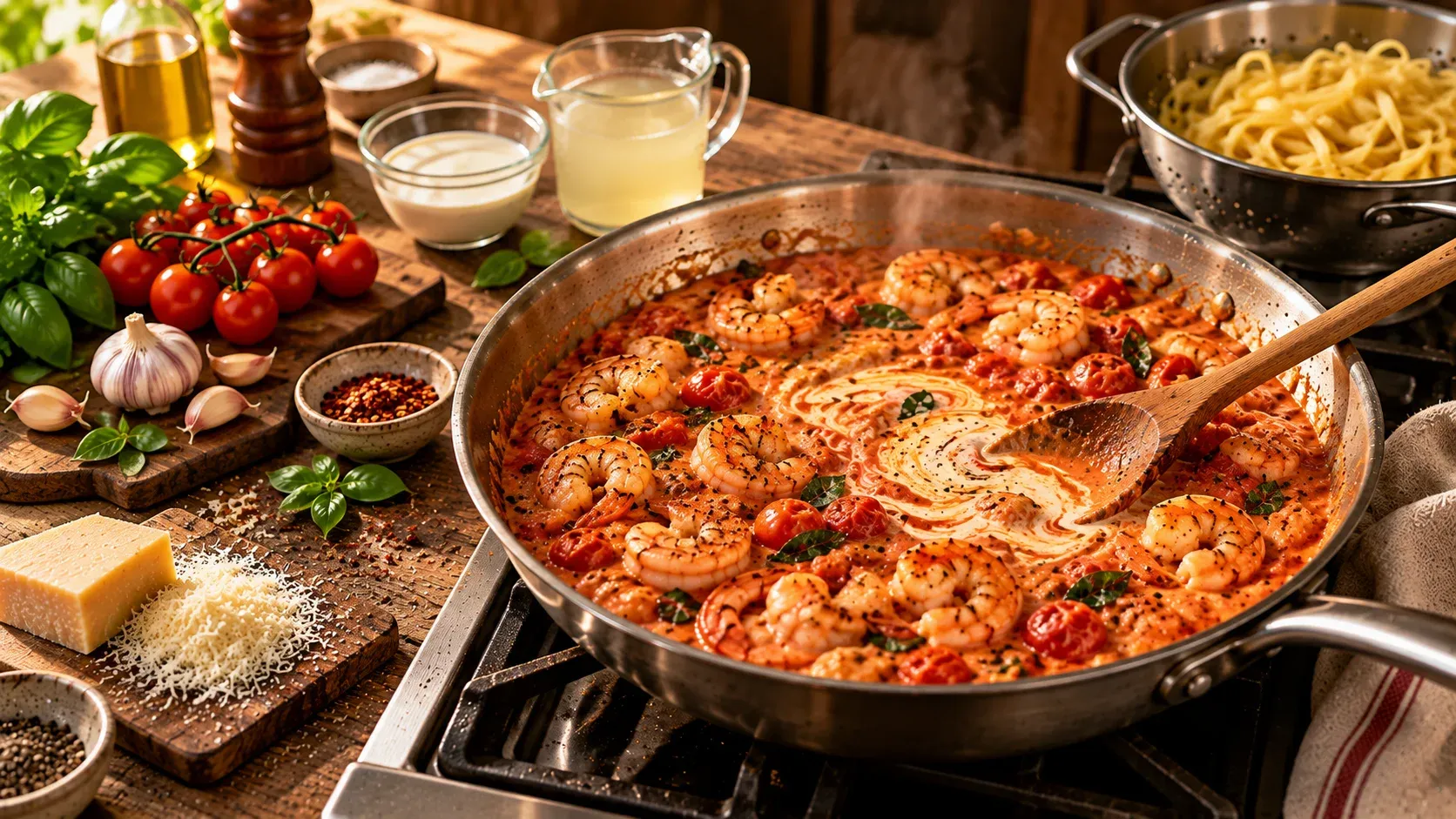
Unlike a pure cream sauce, this one comes together in two distinct stages rather than one. You build the tomato base first, letting it cook down and develop some depth on its own, and only then do you stir the cream in near the end. Adding the cream too early means it spends too long over heat alongside the acidic tomato, which increases the chance of it splitting. Adding it late, once the tomato sauce has already come together, keeps the whole thing far more stable.
Step-by-Step Instructions
- Bring a large pot of salted water to a boil and cook the pasta. Reserve a cup of pasta water before draining.
- Pat the prawns dry and season with salt and pepper.
- Sear the prawns in olive oil over medium-high heat for about a minute per side, then remove from the pan.
- Lower the heat and melt butter in the same pan. Add the garlic and chilli flakes, cooking until fragrant, about twenty to thirty seconds.
- Pour in the tomatoes, season well, and let the sauce simmer for five to seven minutes until it thickens slightly and deepens in color.
- Lower the heat further and stir in the cream, letting it warm through gently rather than boiling.
- Add the drained pasta along with a splash of reserved pasta water, tossing until the sauce clings to the pasta.
- Return the prawns to the pan along with torn basil, tossing briefly to combine.
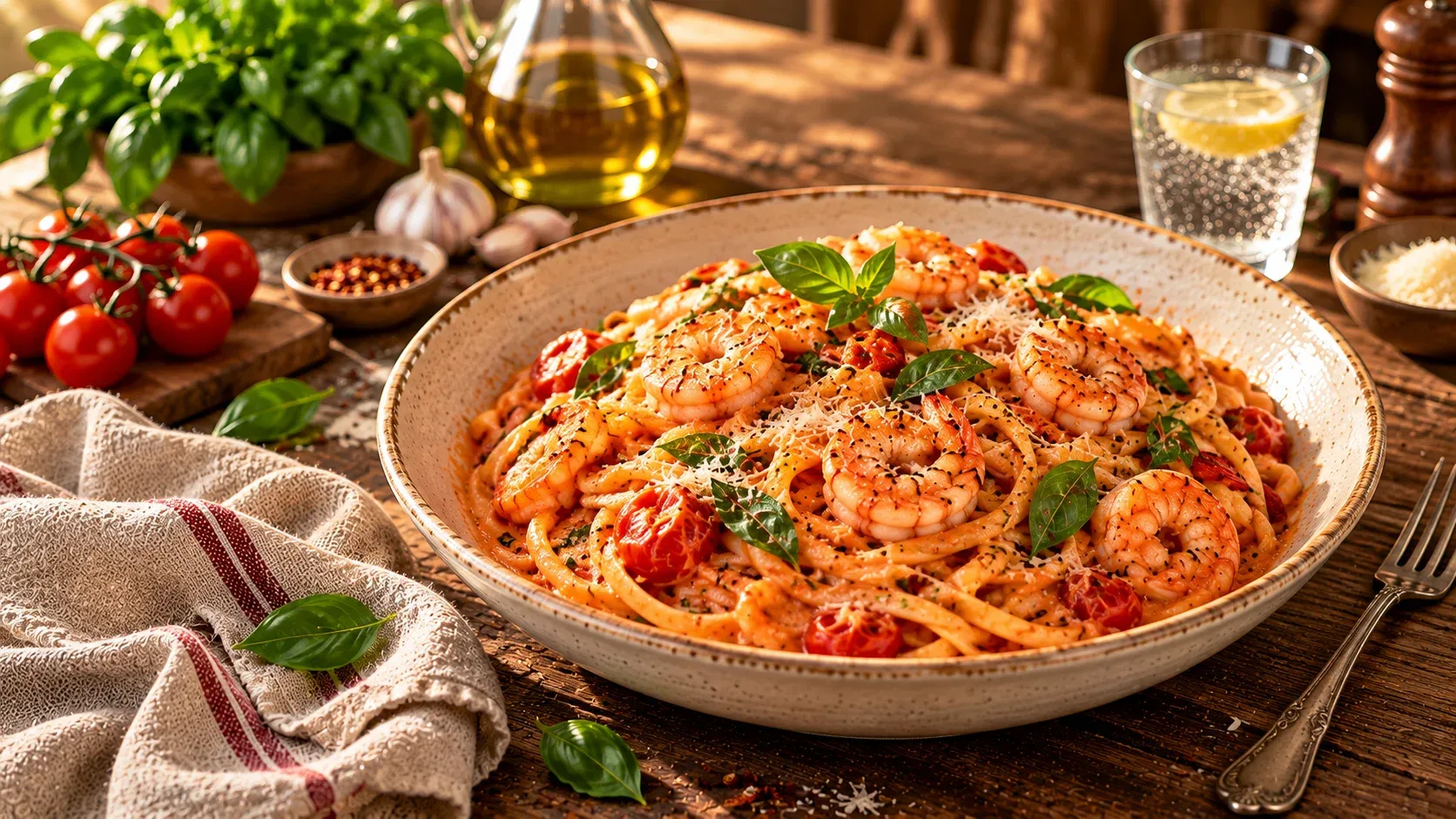
- Finish with grated parmesan and an extra basil leaf or two on top.
Keeping It Glossy, Not Split or Watery
A sauce that combines acid and dairy is actually more prone to splitting than a plain cream sauce, since the acidity in the tomato can cause the cream to curdle if the heat is too high or the cream goes in too early. Keeping the heat low once the cream is added, and never letting the sauce return to a hard simmer afterward, is the single most important thing you can do here. If you notice any separation starting, pull the pan off the heat immediately and stir in a splash of the reserved pasta water. This usually brings it back together without much trouble, since the starch in the water helps re-bind the sauce.
If the sauce looks too thick once everything is combined, a little more pasta water loosens it back up. If it looks too thin, let it simmer gently, off any high heat, for another minute or two before adding the pasta.
What to Serve With It
A simple green salad with a sharp vinaigrette works well alongside this dish, since the acidity cuts through the richness of the sauce nicely. Garlic bread is a natural pairing too, especially given how much sauce this dish tends to produce. If you want something a little more substantial on the side, roasted vegetables like asparagus or broccolini add color and some textural contrast without overwhelming the pasta itself.
What to Drink With It
Because this dish sits between a creamy and a tomato-based sauce, it pairs well with a wine that has enough acidity to stand up to the tomato but isn't so sharp that it clashes with the cream. A dry Pinot Grigio or a lighter Chardonnay both work well here. If you'd rather skip wine, sparkling water with a slice of lemon is a solid, refreshing alternative that doesn't compete with either side of the sauce.
Make It Your Own
More Tomato or More Cream, Adjusting to Taste
Once you've made the base recipe, you'll have a good sense of which direction you prefer. If you want it leaning more tomato-forward next time, cut the cream back slightly and let the tomato simmer a bit longer before adding it. If you want it richer, add a touch more cream at the end, stirred in gradually rather than all at once, so you don't overshoot the balance.
Adding Vegetables
Baby spinach stirred in during the last minute wilts quickly and adds some color without much extra effort. Peas work well here too, especially if you want some texture against the smoothness of the sauce. A handful of sun-dried tomatoes, chopped and added alongside the fresh tomato, intensifies the tomato flavor if that's the direction you want to push the dish.
Is Creamy Tomato Prawn Pasta Healthy?
This dish sits in between our other two versions in terms of richness. It's not as light as a plain tomato-based prawn pasta, since there's real cream in the sauce, but it's also not as heavy as a fully cream-based version, since the tomato takes up some of the volume that would otherwise be cream. Prawns themselves remain lean and high in protein regardless of which sauce they're served in, so most of the richness here comes down to how much cream you choose to use.
If you want to lighten this version further, leaning toward the tomato-heavy end of the ratio we discussed earlier is the easiest adjustment, since it reduces the overall amount of cream in the dish without needing to change anything else about the method. Using half-and-half instead of heavy cream is another simple swap that noticeably reduces the richness while still keeping that creamy quality intact.
Recipe FAQs
Can I use frozen prawns?
Yes. Thaw them fully and pat them dry before cooking so they sear properly instead of releasing water into the pan.
What kind of pasta should I use?
Penne, fettuccine, or rigatoni all work well, since their shape holds onto a thicker sauce like this one more easily than a thinner strand pasta would.
Can I reheat it?
It's best eaten fresh, since both the prawns and the cream-tomato sauce can change texture when reheated. If you do have leftovers, reheat gently on the stove over low heat with a splash of water to loosen the sauce.
Can I freeze it?
This isn't a great candidate for freezing. The combination of cream and tomato tends to separate once frozen and thawed, and the texture rarely comes back the way it started.
What's the difference between this and tomato prawn pasta without cream?
Our tomato prawn pasta recipe skips cream entirely and leans fully into the tomato's acidity and brightness, which makes it the lighter option of the two. This version adds cream into the mix, which softens the acidity and makes the final dish taste richer and rounder. Neither is better. They're just suited to different moods and occasions.
Final Thoughts
Creamy tomato prawn pasta works because it doesn't ask you to choose between two good things. Once you understand how the tomato and cream balance against each other, and why the order you add them in matters, adjusting the recipe to your own taste becomes easy. Lean more tomato one night, more cream the next, and you'll always end up with a dish that tastes intentional rather than like a compromise between two separate recipes.
Recipe
Creamy Tomato Prawn Pasta
By Rabi
Creamy tomato prawn pasta with the perfect balance of rich cream and bright tomato, ready in about 30 minutes.
- Prep
- 10 min
- Cook
- 20 min
- Rest / additional
- 0 min
- Total
- 30 min
- Servings
- 2
- Category
- Main Course
- Cuisine
- Italian
Ingredients
Instructions
- Bring a large pot of salted water to a boil and cook the pasta. Reserve a cup of pasta water before draining. Pat the prawns dry and season with salt and pepper. Sear the prawns in olive oil over medium-high heat for about a minute per side, then remove from the pan. Lower the heat and melt butter in the same pan. Add the garlic and chilli flakes, cooking until fragrant. Pour in the tomatoes, season well, and simmer for 5-7 minutes until slightly thickened. Lower the heat further and stir in the cream, letting it warm through gently without boiling. Add the drained pasta with a splash of reserved pasta water, tossing until the sauce clings to the pasta. Return the prawns to the pan with torn basil, tossing briefly to combine. Finish with grated parmesan and extra basil.
Notes
Adjust the tomato-to-cream ratio to taste: more tomato for a lighter dish, more cream for a richer one. Best eaten fresh.
Nutrition per serving
- calories
- 560 kcal
- protein
- 32 g
- carbohydrates
- 58 g
- fat
- 20 g
Related Articles
More posts you might enjoy